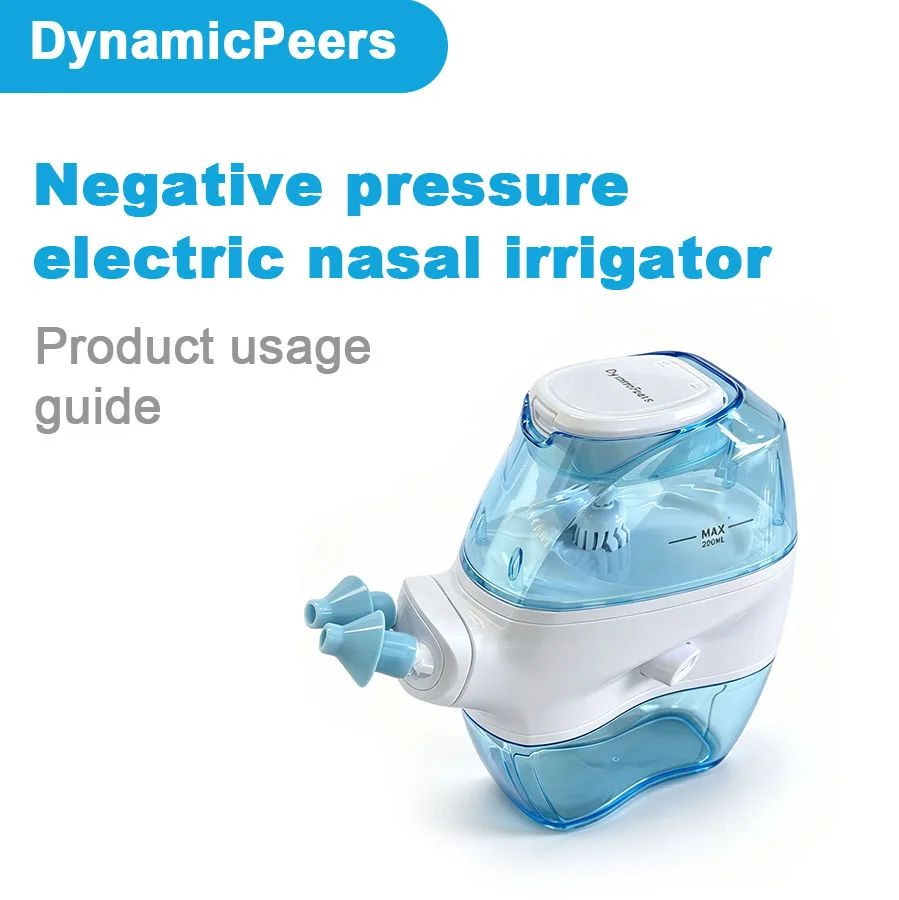
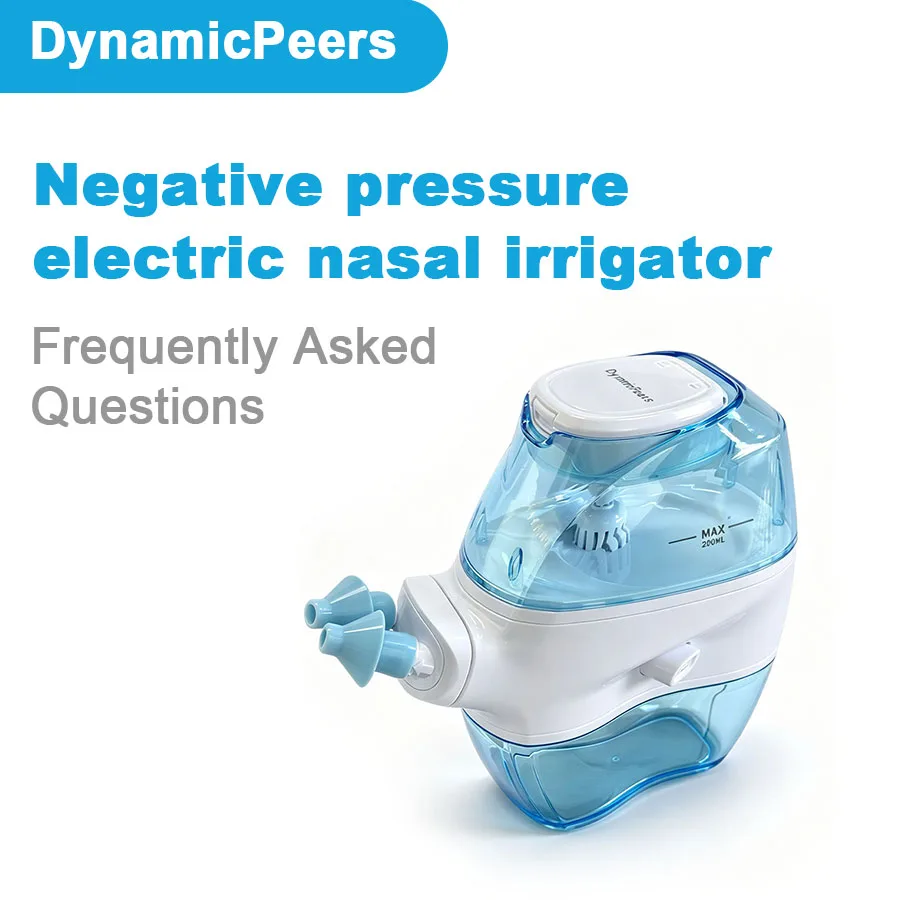
Dynamic Peers™ - Visual Electric Negative Pressure Nasal IrrigatorVisual Electric Nasal Irrigator
DynamicPeers Electric Nasal Irrigator, your ideal companion for home nasal care.
- Equipped with stable pulsating water flow technology, adjustable gear pressure for gentle and efficient nasal cavity cleaning.
- Helps relieve nasal discomfort caused by allergies, dry air, nasal congestion, and external irritants.
- USB connection to mobile app, lightweight and leak-proof body, convenient to carry for home use, business trips, and travel.
Packing List
Shipping Information
After-Sales Protection
Product Warranty
Why Choose SVW-K200
-
Electric Irrigation Delivery——Pump delivers the irrigation fluid, eliminating the need to manually squeeze the bottle.
-
Negative Pressure Recovery System——Used fluid is collected by the recovery system, preventing spills and reducing cleanup work.
-
Wired Visual Observation——Camera probe connects to the display terminal, allowing you to view the interior of the nasal cavity during observation.
-
Before-and-After Comparative Imaging——Images can be captured and saved via supported software, making it easy to compare nasal conditions across different irrigation sessions.
Key Highlights
-
Electric Irrigation: Pump-driven delivery, no manual bottle squeezing required.
-
Negative Pressure Recovery: Collects used fluid to minimize drips and cleaning requirements.
-
Wired Camera Probe: Connects to the display terminal for visual observation.
-
Before-and-After Image Comparison Capture: Can be captured and saved in supported software for comparative analysis.
-
Backed by a 12-month warranty and 1-business-day response service.
Specifications
| Length * Width * Height(Inches) | Weight(KG) | Color | Material | Battery | Product Type | Irrigation Method | Fluid Management | Visualization | Image Capture | Target Users | Warranty Period |
|---|---|---|---|---|---|---|---|---|---|---|---|
| 6.1×3.8×7.1 | 0.58 | Blue | Plastic | Requires 2 AA batteries | Visualized Electric Nasal Irrigator | Electric Delivery | Negative Pressure Recovery | Wired camera probe, connects to display terminal | Supports before-and-after comparison capture in software | Adults requiring regular nasal cavity cleaning | 12 months from the date of purchase |
Frequently asked questions
What is a visualized negative pressure electric nasal irrigator? How is it different from standard nasal irrigators?
The Visual Negative Pressure Electric Nasal Irrigator is a nasal care device that combines "high-definition visualization" and "negative pressure suction" technologies. Its standout feature is a built-in micro-camera at the tip of the irrigator, which transmits the internal conditions of the nasal cavity to a screen in real-time. Compared with traditional nasal irrigators that only allow for "blind flushing," it enables users to intuitively see purulent mucus, allergens, and debris deep within the nasal cavity, and witness firsthand the entire process of negative pressure suctioning them out. Combined with "positive pressure flushing" and "negative pressure suction" technologies, waste liquid is directly discharged into the waste tank, ensuring a more thorough cleaning while avoiding choking and cross-contamination.
How does the visual function help during actual nasal irrigation?
Precise Positioning: Clearly see the specific locations of snot, dry scabs, or thick secretions, guiding you to adjust the nozzle angle for precise flushing. Effect Confirmation: Intuitively determine whether the nasal cavity has been thoroughly rinsed, avoiding ineffective or excessive flushing. Health Observation: Helps in daily observation of the health status of the nasal mucosa (such as redness, swelling, or damage), providing an intuitive reference for medical consultation.
For individuals frequently troubled by choking on water, what are better alternatives to squeeze-bottle sinus rinses?
If choking or coughing occurs repeatedly after flushing, please stop using it first, consult a doctor, and then consider changing the device. The SWW-K200 delivers solution electrically and utilizes negative pressure collection, eliminating the need for manual squeezing; however, it is not a device designed to prevent choking.
What should I do if I feel water flowing into my ears or throat while irrigating my nose?
This is usually caused by incomplete closure of the soft palate or improper operating posture. Close the Soft Palate: Make a "hung" or "ah" sound in your mouth during flushing, which helps close the passage between the nasal cavity and the oral cavity, preventing water from flowing backward. Adjust Posture: Keep your head tilted slightly forward; do not look up or lie flat. Control the Force: Do not push the irrigator nozzle tightly against the inner wall of the nasal cavity. Leave a small gap or wiggle it slightly to prevent excessive suction from blocking and reversing the water flow.
What should I do if my nose is completely blocked and water cannot get through at all?
During extreme nasal congestion, the nasal passages are narrow, making it difficult for water to pass through all at once. You can try the "back-and-forth flushing method": First, flush one nostril for about 10 seconds; Stop and gently blow your nose; Rotate the water flow direction of the irrigator 180 degrees (or switch to the other side) and flush in the reverse direction for 10 seconds; Gently blow your nose again and rest for a moment. Repeating this "back-and-forth" process a few times helps soften and break down sticky secretions until the water can flow smoothly out the other side.
What should I do if the machine does not respond when the switch is pressed, or if the suction becomes weaker?
Check Consumables: For models that require specialized SaltPods, ensure the salt capsule is correctly placed in the crushing chamber and the lid is clicked shut. For safety, the machine locks when no salt capsule is present to prevent nasal irritation caused by flushing with pure water. Check Battery: Confirm that the battery level is sufficient and installed in the correct direction. Check for Clogs: Use the visual screen to check whether the nozzle or internal pipes are blocked by thick mucus or debris. It is recommended to clean the nozzle with warm water. Operational Issues: If the nozzle is completely blocked by the nasal cavity wall, the suction will also weaken. Pull it out slightly or adjust the angle to resolve this.
Can children use the visual negative pressure nasal irrigator?
Yes, and the visual function is particularly helpful for pediatric care, though operational guidelines must be followed: Age and Cooperation: Generally recommended for children over 4 years old who can understand instructions and cooperate by breathing through their open mouths. Pre-wash Preparation: If there are dry, hard crusts inside the nasal cavity, soften them with a saline spray first to prevent the negative pressure from sucking hard crusts deeper in. Posture and Duration: Have the child lie on their side or tilt their head forward by about 30 degrees (like a "side bow"), and keep individual suction sessions short (recommended under 15 seconds). Post-wash Observation: Let the child maintain an upright sitting posture for 15 minutes after washing to prevent residual liquid from flowing backward. If the child shows symptoms such as frequent ear pulling, crying at night, hearing loss, or fever, it may indicate otitis media; stop use immediately and seek medical attention.
Can the nasal irrigator be shared by the whole family? How to clean it?
Although some high-end models adopt an anti-backflow design with complete separation of clean water and waste liquid, reducing the risk of cross-infection, sharing the same set of core components among multiple people is generally not recommended. If sharing is necessary, the following must be observed: Dedicated Nozzles for Individuals: Each family member must use their own exclusive silicone nasal pad/nozzle. Thorough Disinfection: After each use, remove the detachable silicone parts, wash them with warm water and a mild detergent, or disinfect them with alcohol/white vinegar, and then dry them thoroughly to avoid bacterial growth.
Can I make my own nasal irrigation solution using tap water and table salt?
Absolutely not! Tap water may contain bacteria, viruses, or even fatal amoebas, and directly rinsing the nasal cavity with it can easily cause severe intracranial infections. You must use regular normal saline, specialized nasal irrigation salt capsules, or sterile physiological seawater. Meanwhile, the temperature of the flushing solution should be close to body temperature (around 37°C); too cold or too hot will irritate the nasal mucosa.
How often is it appropriate to use?
Daily care/Healthy individuals: Use 2-3 times a week to remove dust and allergens from the air. Rhinitis flare-up period/Cold with nasal congestion: Use 1-2 times daily as directed by a doctor. For adults who need regular nasal cavity cleaning (such as during pollen season or in dusty work environments), it can be used daily. Children and post-operative users should consult a doctor first. Note: Excessive and frequent use is not recommended to avoid damaging the nasal cavity's natural mucous barrier and micro-ecological environment.
Is this a diagnostic device?
No. It only supports home nasal cavity cleaning and visual observation, cannot be used to diagnose diseases, and cannot replace an ENT examination.